Home/Journal
Notes from
the Chambal.
Short stories about the river, the ravines and the table. Stories from Shubhim itself are on their way.
The river that stayed wild
The Chambal begins in the Vindhya hills, crosses Madhya Pradesh and Rajasthan, and meets the Yamuna in Uttar Pradesh. Old texts call it Charmanvati.
Folklore says the river was cursed, and that people kept away. Whatever the reason, much of it still runs quiet, and the National Chambal Sanctuary now protects gharial, Ganges river dolphins and red-crowned roof turtles along its length.
Beehads, the folded land
Beehad is the local word for the ravines: soft earth cut by water into narrow gullies and flat-topped ridges. In the early light they turn from grey to gold to red.
The gullies once hid baaghis, the rebels of local legend. Today you meet them mostly in ballads, and on the road between one old temple and the next.
Temples in sandstone
Near Morena, Bateshwar gathers about two hundred small sandstone temples from the 8th to 10th centuries. At Mitawali, a round temple of sixty-four yoginis opens to the sky.
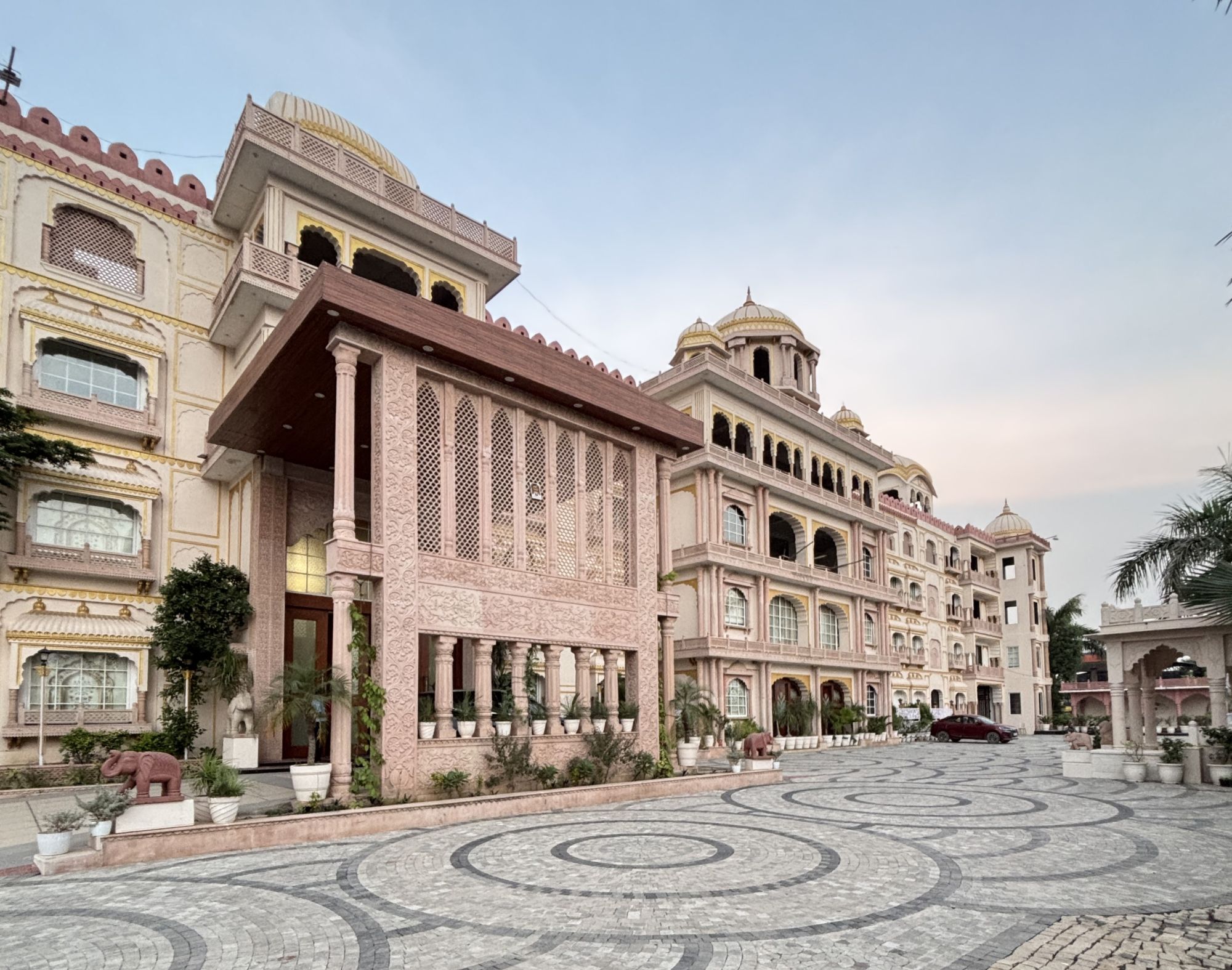
Red and buff sandstone is the language of the region. It is also the language of Shubhim: hand-carved, warm in the afternoon, and meant to last.
A table that stays laid
Chambal cooking is made for company: bedai in the morning, daal tikkad at midday, a halwai’s table when there is something to celebrate. At Maharaja, slow-cooked recipes honour that.
The rule at every Chambal table is simple. There is always room for one more.
Come in
Come as our guest.
Feel like family.
A few days away, a celebration, or a meal together. We look forward to welcoming you.